Tung Pui-Sun
Early Life
Tung Pui-Sun was born in 1942 in Wuzhou, Guangxi. He is a Hong Kong illustrator, comics artist, film visual designer, and painter whose imagery helped define the visual identity of Chinese pulp fiction, popular fiction, and martial-arts literature from the mid-twentieth century onward.
A self-taught artist, Tung began drawing professionally soon after arriving in Hong Kong at age 15, following a brief apprenticeship with Cai Da Ke (蔡大可). He subsequently joined Cheung Kee Book Co. (祥記書局), entering the commercial publishing industry during a period of rapid expansion for serialized fiction and illustrated novels.
Publishing Career and Visual Identity
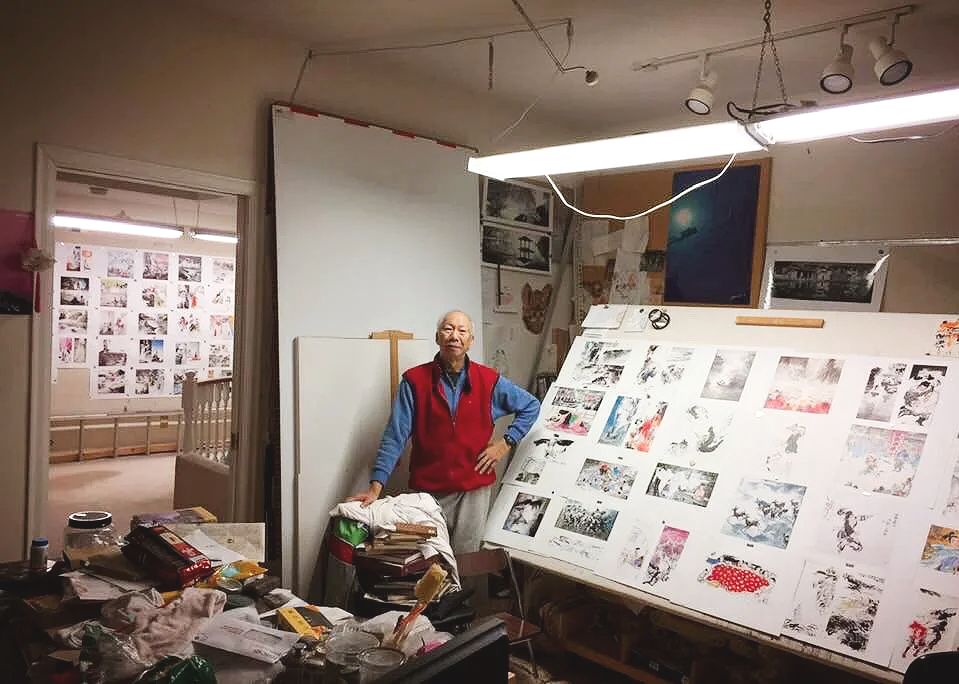
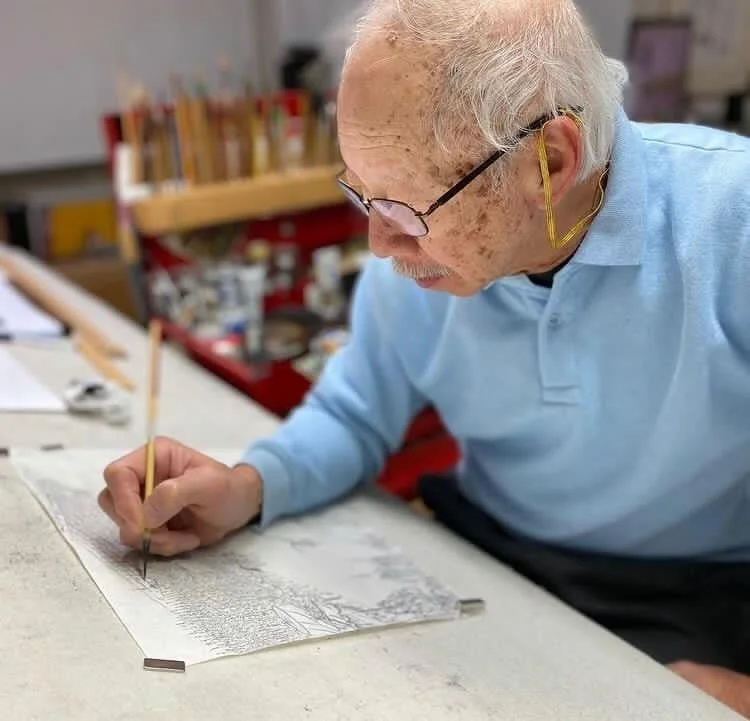
Between the 1960s and 1980s, Tung became one of the most recognizable illustrators in Hong Kong print culture. His work for Global Publishing (環球出版社) and Law Bun's Mass Media Enterprise, Xin Xi Group (新系機構), defined how popular fiction was presented visually. He developed cover designs, character interpretations, and interior illustrations that shaped readers' encounters with each text. His visual style—firm ink lines, defined silhouettes, and emphasis on climactic scenes—became synonymous with the paperback and periodical literature of the era.
Tung's drawings circulated widely across Hong Kong's newspapers, embedding his imagery in everyday reading practices. He illustrated for major publications including 《新報》(Hong Kong Daily News), 《天天日報》(Tin Tin Daily News), 《工商日報》(Kung Sheung Daily News), 《東方日報》(Oriental Daily News), 《大公報》(Ta Kung Pao), 《天下日報》(The World Journal), 《香港日報》(Hong Kong Daily), 《今天日報》(Today's News), 《世界日報》(World Journal), 《星島日報》(Sing Tao Daily), 《明報》(Ming Pao), and others. Within these publications, his work appeared alongside serialized novels, feuilletons, entertainment pages, and cultural essays, contributing to Hong Kong's shared visual media environment.
His presence in magazines was equally extensive, spanning genres from romance and lifestyle to wuxia serials and television culture. He contributed to 《姐妹雜誌》(Sister Magazine), 《清新周刊》(Fresh Weekly), 《愛情故事》(Love Story), 《藍皮書》(Blue Book), 《香港電視》(Hong Kong TV Magazine), 《新電視》(New TV Magazine), 《今日世界》(Today's World), 《明報月刊》(Ming Pao Monthly), 《東方新地》(Eastweek), 《武俠世界》(Wuxia World), 《香港武俠小說月刊》(Hong Kong Wuxia Fiction Monthly), and 《香港周刊》(Hong Kong Weekly), among many others.
Within this print ecosystem, Tung's illustrations functioned as visual gateways. The constraints of newspaper and magazine production—rapid schedules, episodic installments, shifting editorial priorities—favored images that were structurally clear and immediately impactful. His drawings condensed dramatic tension and emotional tone into single images encountered repeatedly in public print spaces, representing far more than decoration.
Comics and Editorial Illustration
Alongside book illustration, Tung produced comics for newspapers and magazines over many years. His serialized works include Boss Chow Si Wai (《波士周時威》), The Uninhibited Woman (《豪放女》), Chu Yisheng (《朱義誠》), Sole-Fall Chow and Rotten-Life Lun (《鞋底秋與爛命倫》), Anding-wing (《安定榮》), and King of Swindlers (《老千王》). These titles drew from familiar figures and social environments in Hong Kong, reaching broad readerships through regular publication.
He also produced editorial comics for newspapers and general-interest magazines, offering observations on working life, interpersonal relationships, and urban scenes in a direct visual format suited to the periodical page. Appearing in commentary sections and weekend supplements, this strand of his work remained steady throughout Hong Kong's peak print era.
Editorial Work in Canada
After emigrating to Canada, Tung continued creating drawings for Chinese-language newspapers and community publications. His work has appeared in the Western Canada editions of Ming Pao and Sing Tao Daily, among other regional outlets, focusing on everyday experience, local interactions, and the immigrant environment through compact visual storytelling adapted to newspaper format. He has maintained this activity throughout his years in Canada and continues to contribute into his eighties, remaining a stable presence in the visual culture of the Chinese diaspora press.
Film Visual Design and Industry Publishing
Tung's practice intersected directly with Hong Kong cinema. At Xianhe–Kong Lian Film Company (仙鶴港聯電影公司), he contributed to art direction, designing sets, costumes, and visual concepts. His drawings assisted studio decision-making, translating character and production intent into spatial planning and on-screen composition.
He also worked within the film-publishing sphere through Nan Guo Dianying 南國電影 (Southern Screen), the periodical associated with Shaw Brothers. More than entertainment reporting, Southern Screen acted as an extension of studio culture. Tung created visual retellings of films that presented key scenes and character relationships ahead of theatrical release, linking him to the production environments surrounding Shaw Brothers, Cathay, Golden Harvest, and related studios during a formative era of Hong Kong cinema.
Transition to Painting
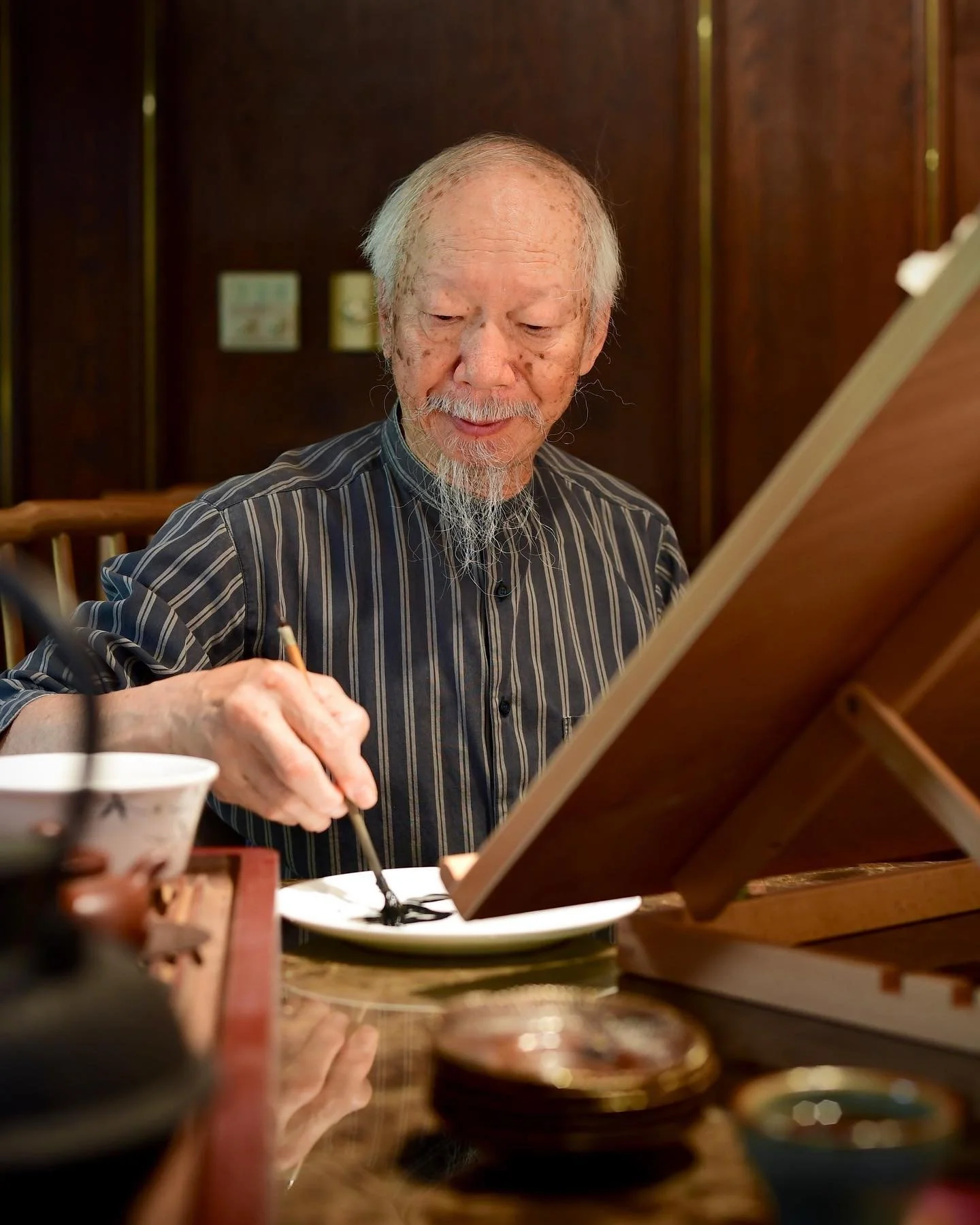
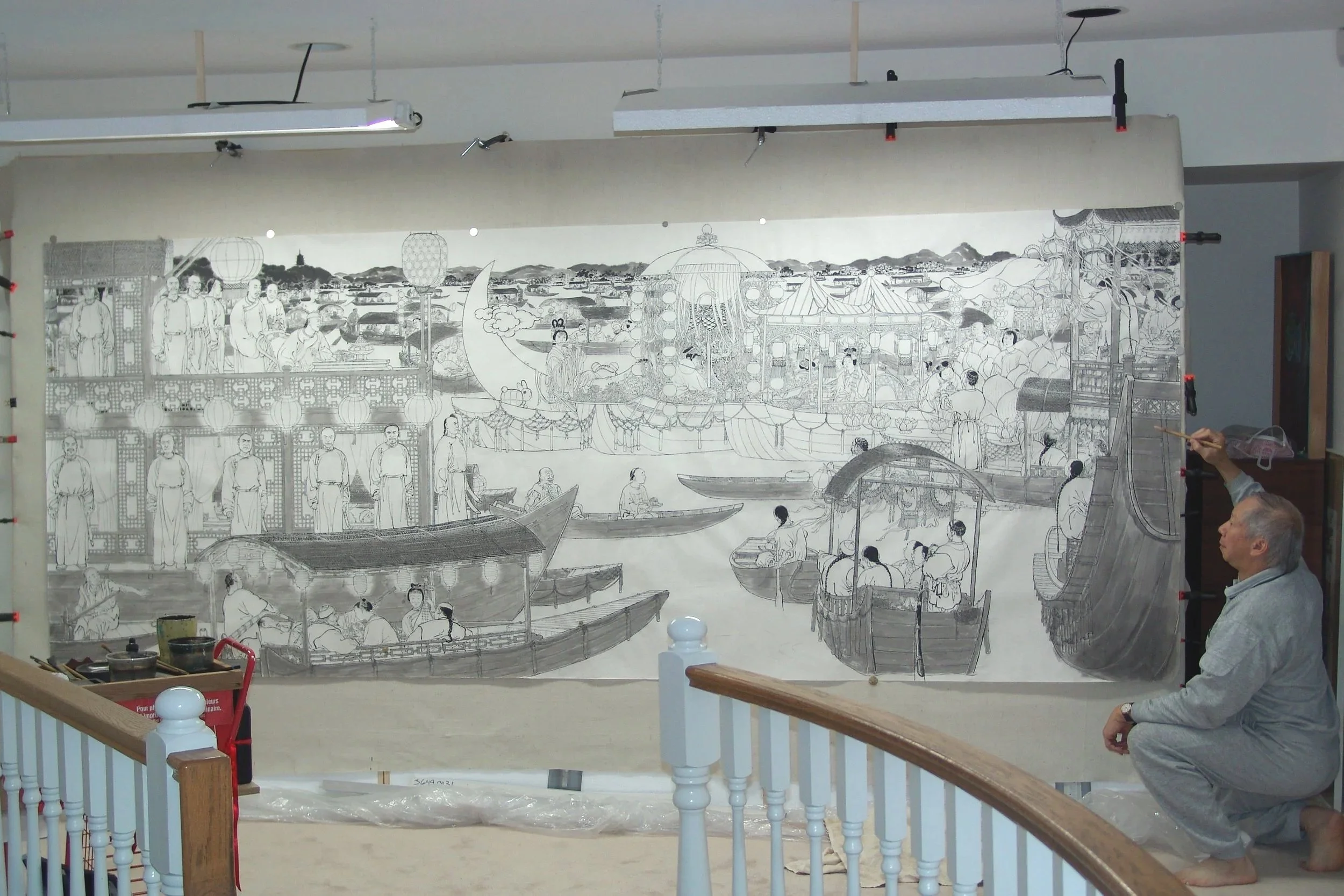
Beginning in the early 2000s, Tung turned increasingly to ink painting as his primary artistic medium. This shift did not abandon the compositional strategies of illustration; instead, figures, gestures, and decisive confrontations were absorbed into brushwork, layered washes, and spatial rhythm. His paintings revisit literary universes, particularly those of Jin Yong, expanding earlier interpretations into large-format pieces. They depict martial-arts protagonists, historical personalities, and emblematic encounters through posture, atmosphere, and movement. Sequential paneling gives way to negative space, tonal contrasts, and calligraphic flow, while the sense of dramatic staging remains.
During this period, Tung's paintings were compiled into anthologies issued in connection with exhibitions. Volumes devoted to his interpretations of Jin Yong's novels include Jin Yong Shuobu Qingjie: The Paintings of Tung Pui Sun 《金庸說部情節:董培新畫集》(Yuan-Liou Publishing Co., Taipei, 2008); Tung Pui Sun Paints Jin Yong 《董培新畫說金庸》(Guangzhou Publishing House, 2010); and Visual Translations of Jin Yong's Fiction – Works by Tung Pui Sun 《董培新畫說金庸》(The Commercial Press / Cosmos Books, Hong Kong, 2020). These editions encompass portraits, confrontations, court scenes, and widely recognized episodes interpreted through ink.
Beyond the Jin Yong cycles, Tung has developed painting series on historical figures, court settings, cultural motifs, and independent subjects not tied to a single literary source. These works appear in printed anthologies and exhibition catalogues across Vancouver, Hong Kong, Guangzhou, Macau, Hangzhou, Taipei, and other venues. Books and exhibitions in this period operate together, extending early print-media practices into the gallery and museum environment while maintaining thematic continuity.
董培新
早年生平
董培新1942年生於廣西梧州。他是香港插畫家、漫畫家、電影美術及現代水墨畫家,其畫筆深刻塑造了二十世紀中葉以來華語流行小說與武俠文學的視覺面貌。
他是自學成才的藝術家,十五歲來港後不久即投身繪畫創作,曾短暫師從蔡大可,其後加入祥記書局,踏入正值連載小說蓬勃發展的商業出版業。
出版生涯與視覺風格
1960至1990年代,董培新成為香港印刷文化中最具辨識度的插畫家之一。他為環球出版社及羅斌旗下的新系機構繪製封面、人物造型與內頁插畫,深刻影響了大眾對流行小說的形像。他的畫風——線條剛勁、輪廓鮮明、着重高潮場景——成為那個時代流行小說與雜誌的視覺文化的標誌。
他的插畫廣見於香港各大報章,融入市民的日常閱讀之中。供稿刊物包括《新報》、《天天日報》、《工商日報》、《東方日報》、《大公報》、《天下日報》、《香港日報》、《今天日報》、《世界日報》、《星島日報》、《明報》等。在這些刊物中,他的畫作伴隨連載小說、副刊、娛樂版及文化評論同步刊出,構成香港各大流行媒體的重要一部分。
他在雜誌界的參與同樣廣泛,橫跨愛情、生活、武俠連載與電視文化等多個範疇,供稿刊物包括《姐妹雜誌》、《清新周刊》、《愛情故事》、《藍皮書》、《香港電視》、《新電視》、《今日世界》、《明報月刊》、《東方新地》、《武俠世界》、《香港武俠小說月刊》、《香港周刊》等。
在出版業中,他的插畫是文字世界的窗口。報章雜誌的緊迫出版節奏,要求畫面結構清晰、與時並進。他以一幅畫濃縮戲劇的張力與情感基調,在文字空間中反覆與讀者相遇,早已超越裝飾的功能。
漫畫
除書籍插畫外,董培新多年來持續為各大報章雜誌創作漫畫。連載作品包括《波士周時威》、《豪放女》、《朱義誠》、《鞋底秋與爛命倫》、《安定榮》及《老千王》等,取材自香港熟悉的人物與社會環境,職場百態、人際關係、娛樂趣聞與都市日常,透過每日或定期刊出,吸引廣大本地、東南亞、以至海外的讀者,印證了香港出版業的全盛時期。
旅居加拿大的專欄工作
移居加拿大後,董培新繼續為當地華文報章及社區刊物供稿,包括《明報》及《星島日報》加拿大版等。他以簡潔的筆觸記錄日常生活與探討本地華人的心聲,數十年來筆耕不輟。
電影視覺設計與業界出版
董培新的創作與香港電影業直接交匯。在仙鶴港聯電影公司,他參與美術指導工作,負責佈景、服裝及視覺概念設計,以圖稿協助製作的決策,將人物性格與場景轉化為具體的空間規劃與銀幕構圖。
他亦透過邵氏旗下的《南國電影》雜誌參與電影出版工作。這份刊物不止於娛樂報導,更是邵氏電影文化的延伸。他為電影繪製連環圖,以圖像呈現關鍵場景與人物關係,早於院線公映前與讀者見面。與他合作過的電影工司包括邵氏、國泰、嘉禾等電影公司。
現代水墨畫
2000年代初,董培新逐漸以水墨畫為主要創作媒介。這一轉變並非與插畫生涯割裂,而是將人物、姿態與各種場面融入大形的畫面中。重訪文學世界,尤以金庸小說為甚。
此時期的畫作結集成冊,與展覽相輔相成,出版作品包括:《金庸說部情節:董培新畫集》(台北遠流出版公司,2008年)、《董培新畫說金庸》(廣州出版社,2010年)及《董培新畫說金庸》(香港商務印書館/天地圖書,2020年)。
除金庸系列外,他亦發展了以歷史人物、宮廷場景、文學經典題材及獨立主題為主的創作系列。相關作品見於溫哥華、香港、廣州、澳門、杭州、台北等地的畫集與展覽,將早年出版業和媒體的創作脈絡延伸至畫廊與博物館,主題一脈相承。
Selected Exhibitions
2000 — 春風畫展 "Spring Breeze Painting Society Exhibition," UBC Asian Cultural Centre, Vancouver (group)
2002 — 董培新畫展 "Tung Pui Sun Solo Exhibition," University of British Columbia Asian Centre, Vancouver
2003 — 董培新畫展 "Tung Pui Sun Solo Exhibition," Hong Kong City Hall, Hong Kong
2005 — 藝展畫展 "Art Exhibition," Chinese Christian Mission Centre (中信中心), Burnaby (group)
2005–2007 — 董培新畫說金庸 "Tung Pui Sun Paints Jin Yong," Guangdong Art Institute, followed by presentations in Macau, Hong Kong, and Vancouver
2006 — 董培新筆下俏佳人 "The Unique Feminism in Tung Pui-Sun's Painting," 集雅齋畫廊 (Ji Ya Shai Gallery), Hong Kong
2008 — 藝展08「昨天、今天、明天」 "Art Exhibition 08: Yesterday, Today, Tomorrow," Chinese Christian Mission Centre (中信中心), Burnaby (group)
2008 — 董培新金庸新作賑災畫展 "Tung Pui-Sun's New Paintings of Jin Yong for Sichuan Disaster Relief," 商務印書館 (The Commercial Press), Hong Kong
2008 — 董培新詮釋金庸小說名場面畫展 "Scenes from Jin Yong's Novels – Tung Pui Sun Painting Exhibition," Yi Xian Gallery, National Dr. Sun Yat-sen Memorial Hall, Taipei
2010 — 上海世博會文化藝術項目 "Cultural Programme, Shanghai World Expo," Shanghai; 加拿大畫家展 "Canadian Painters Exhibition," Chengdu; 董培新畫說金庸 "Tung Pui Sun Paints Jin Yong," West Lake Expo Museum, Hangzhou
2011 — 董培新作品展 "Tung Pui Sun Exhibition," 精藝軒 (Ching Ngai Atelier), Hong Kong
2012 — 藝展2012 "Art Exhibition 2012," Chinese Christian Mission Centre (中信中心), Burnaby (group)
2012 — Beyond 300,000 "Beyond 300,000," Vancouver
2013 — 董培新畫說金庸 "Tung Pui Sun Paints Jin Yong," Hong Kong Central Library, Hong Kong
2013 — 藝彩生輝名家綜藝展 "Artistic Splendour Masters Variety Exhibition," Chinese Christian Mission Centre (中信中心), Burnaby (group)
2014 — "Art Show 2014," Chinese Christian Mission Centre (中信中心), Burnaby (group)
2015 — "Art Show 2015," Chinese Christian Mission Centre (中信中心), Burnaby (group)
2016 — "Art Show 2016," Chinese Christian Mission Centre (中信中心), Burnaby (group)
2017 — "Art Show 2017," Chinese Christian Mission Centre (中信中心), Burnaby (group)
2018 — "Art Show 2018," Chinese Christian Mission Centre (中信中心), Burnaby (group)
2019 — 俠客雄心.董培新作品展 "Of Knights and Chivalry: Tung Pui Sun," Gallery by the Harbour, Tsim Sha Tsui, Hong Kong
2022 — 董培新65周年作品回顧展 "Tung Pui Sun 65th Anniversary Retrospective," Vancouver
Philatelic and Collector Editions
Tung's artwork has entered broader circulation through commemorative philatelic projects in Hong Kong and Mainland China. His paintings have been featured in stamp issues interpreting classical literature, martial-arts culture, and wuxia-related themes.
For Hongkong Post, his work was featured in the special stamp issue "Classical Novels of Chinese Literature – Romance of the Three Kingdoms" (「中國古典文學名著──《三國演義》」特別郵票) released on 16 March 2021. The series presents eight scenes from Romance of the Three Kingdoms through Tung's paintings, including "The Oath of the Peach Garden," "A Notion of Heroes over Warm Wine," "Escorting Sisters-in-law for a Thousand Miles," "Three Visits to the Thatched Cottage," "Zhao Yun Saving the Young Lord," "Empty Fort Stratagem," "The Arrow through the Halberd," and "Borrowing Arrows with Straw Boats." The issue included stamps, miniature sheets, presentation packs, and collector cards.
Tung's work also appeared in martial-arts commemorative editions for the 16th Asian Games (Guangzhou 2010), issued by China Post (中國郵政). These releases presented his ink depictions of martial-arts forms, weapon techniques, and tournament motifs as printed stamp sets and collector sheetlets.
In addition, his paintings are featured in Jin Yong–related philatelic collections produced in Mainland China, including the Jin Yong's Works Commemorative Stamp Collection Album 《金庸作品郵票紀念珍藏冊》and associated personalized sets pairing official postage with printed reproductions of his work. These projects integrate literature, visual culture, and philately, extending Tung's impact beyond conventional publishing and exhibition formats.
Legacy
Across pulp publishing, serialized illustration, comics, film visual design, and ink painting, Tung Pui-Sun shaped how multiple generations pictured the fictional worlds they encountered. His work circulated widely across newspapers, paperbacks, and studio publications at a time when image and text were closely intertwined in Hong Kong's popular culture. Through this sustained presence, he became an integral figure in Hong Kong's visual culture, forming a continuous record of how stories were received and interpreted—extending from paperback covers to studio departments, from newspaper strips to exhibition venues and museums.